Most renovation cost guides assume you hand over the keys and move out for three months. Plenty of Dubai apartment owners do not have that option, especially in smaller units where a short rental elsewhere would swallow the renovation budget. Renovating while living in the apartment is entirely doable, but only if the sequence of trades is planned around occupation rather than around the contractor’s convenience. Here is how we approach it.
Decide the occupied zones before anything else
The first decision is not design, it is phasing. Split the apartment into zones that will be out of service and zones you keep living in, then order the works so you never lose the kitchen and the bathroom in the same week. In a one-bedroom this usually means bathroom first, kitchen second, living areas last, because a functioning kitchen with a bucket and a bathroom you can reach at 2 a.m. are the two non-negotiables of occupied living. If you have two bathrooms, you have far more freedom: strip both wet areas at once and the schedule compresses by weeks.
Front-load everything destructive and dusty
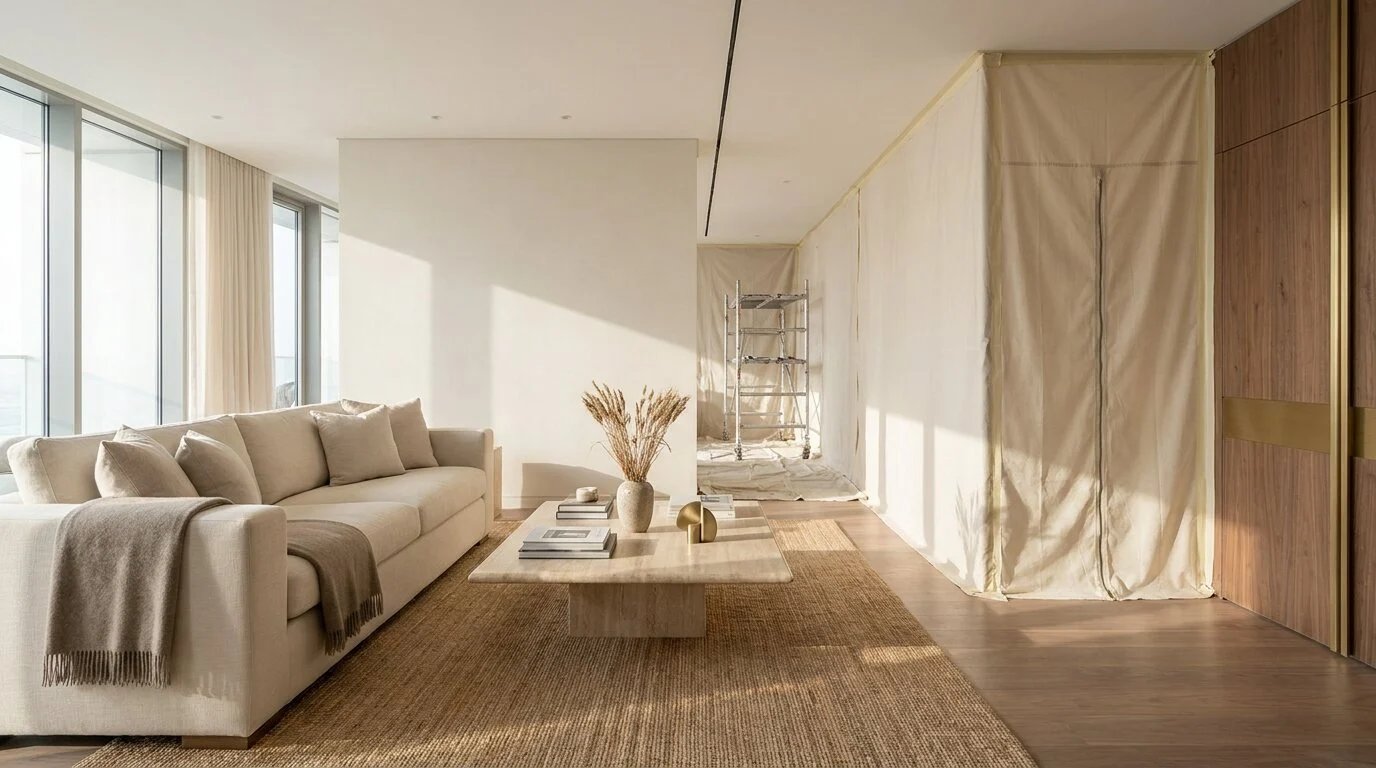
Demolition, tile popping, screed removal and wall chases should be compressed into the earliest possible window, ideally a stretch when you can stay elsewhere for a week, even a hotel week is often money well spent. Dubai apartments are predominantly concrete-block construction, so chasing walls for new electrics and plumbing generates fine dust that penetrates every drawer in the unit. One concentrated dirty phase beats four scattered ones. During it, seal the occupied zone with taped plastic sheeting at doorways, cover return-air grilles so the HVAC does not redistribute the dust, and insist the contractor hauls debris daily rather than stacking it on the balcony.
MEP rough-in is where occupied renovations are won or lost
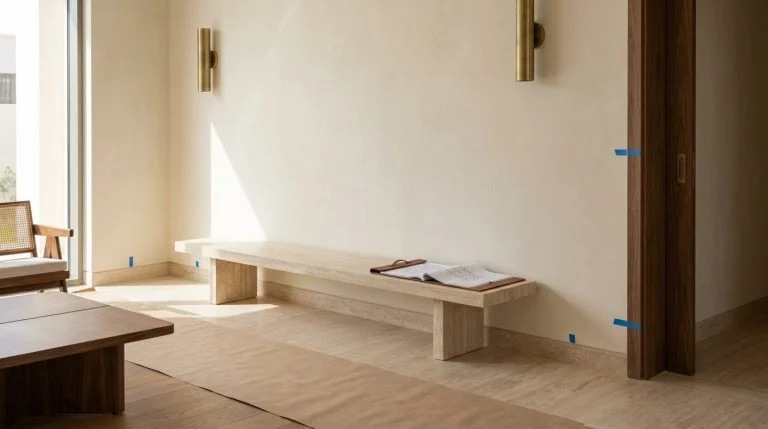
Mechanical, electrical and plumbing first-fix is the phase where changes are cheap and mistakes are expensive. Every light point, socket, water feed and drain has to be decided now, because once the block work is made good and tiling starts, moving a shower drain means breaking out a finished floor. Walk the site with the drawings and physically mark positions with tape on the walls and floor. In occupied projects we also re-check the A/C layout at this stage: many Dubai apartment renovations relocate or add splits or vents, and ducting runs have to fit above false ceilings with the right falls for condensate, or you will be chasing ceiling stains a year later.
Sequence the finishes so only one trade is ever displaced
A workable finish sequence for an occupied unit runs: block work and plaster repairs, then waterproofing and screeds in wet areas, then tiling, then gypsum and paint, then joinery install, then final MEP second-fix and testing. Paint before joinetry where possible so kitchens and wardrobes install onto finished walls. The logic is simple: every trade that comes back later re-dirties the space you are living in. Fewer re-entries means fewer weeks of wiping grey dust off your own kettle.
Noise, access and building rules
Check the building’s renovation rules before signing anything. Most Dubai towers restrict noisy works to weekday daytime hours, commonly something like 8 a.m. to 6 p.m. Monday to Saturday, and many require service-lift use for materials, protection for corridors, and a refundable deposit with the building management. Some communities also require a fit-out permit or NOC before works begin, and contractors must often show insurance to the building. Getting this paperwork sorted before the first tile is lifted is far cheaper than a stop-work order in week two.
Where occupied renovations genuinely cost more
Be honest with yourself about the premium. Occupied work usually adds cost in three places: longer calendar duration means more site supervision days, phased works mean some trades visit twice instead of once, and daily protection and cleaning of lived-in areas is real labour. A realistic planning assumption is somewhere around 10 to 20 percent on top of a vacant-equivalent job, plus a slower calendar. What you save on temporary housing may or may not cover that. Run both numbers before deciding, and see our detailed breakdowns of what a Dubai apartment renovation actually costs in 2026 and how villa renovation budgets break down room by room.
The occupied-renovation checklist that saves the most pain
Keep one bathroom functional at all times. Never lose the kitchen for more than 48 hours, and set up a temporary corner with a kettle and microwave before the kitchen strip. Bag and store soft furnishings before demolition week. Photograph every wall and floor before works start for the snagging record. Agree daily working hours and a debris-removal schedule in writing. And book the deep clean for the day after final handover, not a week later, because fine dust keeps settling out of ceiling voids for days.
Occupied renovations trade money and patience for the ability to stay put, and with disciplined sequencing that trade can be a reasonable one. If you are weighing it for your own apartment, our design and build services page explains how we plan phasing around residents, and the smart home coordination guide covers the extra planning that wiring upgrades add.